Understanding Crypto Wallets: Hot vs Cold Storage
Learn the differences between hot and cold crypto wallets, understand which storage solution is right for your needs, and discover best practices for securing your digital assets.
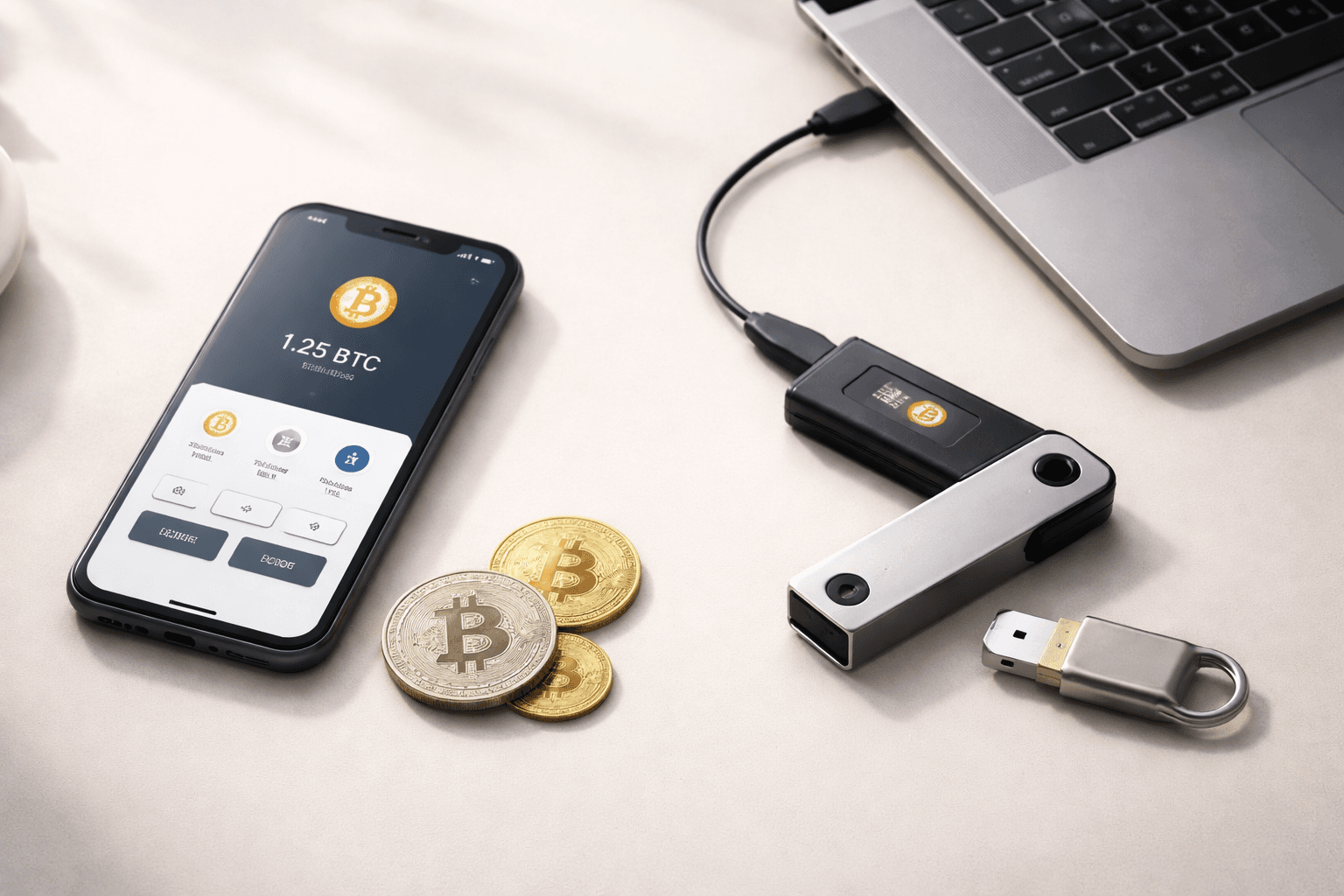
If you own cryptocurrency, understanding how to store it securely is just as important as knowing what to buy. Your choice of wallet can mean the difference between keeping your assets safe and losing everything to hackers.
The crypto wallet landscape essentially divides into two categories: hot wallets (connected to the internet) and cold wallets (offline storage). Each has distinct advantages and trade-offs that every crypto investor should understand.
Quick Summary
Hot Wallets: Connected to the internet, convenient for frequent trading, but more vulnerable to hacks
Cold Wallets: Stored offline, maximum security for long-term holding, but less convenient for quick transactions
Best Practice: Use both—hot wallet for active trading, cold wallet for long-term storage
What is a Crypto Wallet?
A crypto wallet doesn't actually store your cryptocurrency—your coins exist on the blockchain. Instead, a wallet stores your private keys, which are the cryptographic passwords that prove ownership and allow you to send your crypto.
Think of it like this: the blockchain is a massive public ledger, and your private key is the signature that authorizes transactions from your account. Whoever controls the private keys controls the crypto.
This is why the crypto community says: "Not your keys, not your coins." When you leave crypto on an exchange, you don't control the private keys—the exchange does.
Hot Wallets Explained
A hot wallet is any cryptocurrency wallet that maintains a connection to the internet. This includes:
- Exchange wallets (Coinbase, Binance, Kraken)
- Mobile wallets (Trust Wallet, Coinbase Wallet)
- Desktop wallets (Exodus, Electrum)
- Browser extension wallets (MetaMask, Phantom)
Advantages of Hot Wallets
Convenience: Hot wallets allow instant access to your crypto for trading, spending, or transferring. You can interact with DeFi protocols, buy NFTs, and make transactions anytime.
User-friendly: Most hot wallets have intuitive interfaces designed for beginners. Setting up takes minutes, and managing your portfolio is straightforward.
Free to use: Software hot wallets are typically free, with costs only arising from network transaction fees.
Quick setup: You can create a hot wallet and start receiving crypto immediately.
Risks of Hot Wallets
Hacking vulnerability: The always-online nature makes hot wallets susceptible to cyberattacks. Hackers can exploit security flaws, deploy malware, or use phishing attacks to steal funds.
Exchange risks: Custodial exchange wallets expose you to platform risks—if the exchange gets hacked, goes bankrupt, or freezes withdrawals, you could lose access to your funds.
Malware threats: Desktop and mobile wallets can be compromised by keyloggers, trojans, or clipboard-hijacking malware.
Security Alert
In early 2025, the Bybit exchange was hacked for $1.6 billion, with $300 million estimated to be irrecoverable. This highlights the risks of keeping large amounts on exchanges or in hot wallets.
Cold Wallets Explained
A cold wallet stores your private keys completely offline, isolated from internet-connected devices. Types include:
- Hardware wallets (Ledger, Trezor, BitBox)
- Paper wallets (printed private keys and QR codes)
- Steel/metal wallets (engraved seed phrases for durability)
- Air-gapped computers (dedicated offline devices)
Advantages of Cold Wallets
Maximum security: Offline storage eliminates remote attack vectors. Hackers cannot access what isn't connected to the internet.
Full control: You hold your own keys with no dependence on third parties. No exchange can freeze your funds or go bankrupt with your money.
Protection from online threats: Phishing attacks, malware, and exchange hacks cannot reach your cold-stored crypto.
Long-term storage: Ideal for holding significant amounts of crypto you don't need to access frequently.
Limitations of Cold Wallets
Less convenient: Accessing funds requires physical access to the device. Transactions take more steps and time.
Upfront cost: Hardware wallets range from $59 to $400, unlike free hot wallets.
Learning curve: Setting up and using cold storage properly requires more technical knowledge.
Physical risks: Hardware can be lost, stolen, damaged, or destroyed (though seed phrases allow recovery).
Hardware Wallet Comparison
The two dominant hardware wallet brands are Ledger and Trezor. Here's how they compare:
| Feature | Ledger | Trezor |
|---|---|---|
| Security Chip | EAL5+/EAL6+ Secure Element | OPTIGA Trust M (EAL6+) on Safe models |
| Firmware | Mostly closed-source | 100% open-source |
| Asset Support | 15,000+ coins/tokens | 9,000+ coins/tokens |
| Entry Price | $79 (Nano S Plus) | $59 (Trezor One) |
| Premium Price | $399 (Stax) | $169 (Model T) |
| Trustpilot Rating | 2.8/5 | 4.5/5 |
Which Hardware Wallet to Choose?
Choose Ledger if:
- You need the broadest asset support (15,000+ coins)
- You want mobile convenience via Bluetooth (Nano X)
- You use staking, DeFi, and NFT features frequently
- You prefer a polished app experience
Choose Trezor if:
- You value open-source transparency and community trust
- Privacy is a top priority
- You want a more affordable entry point
- You prefer devices with proven track records
Hot vs Cold Wallet: Side-by-Side Comparison
| Aspect | Hot Wallet | Cold Wallet |
|---|---|---|
| Internet Connection | Always connected | Completely offline |
| Security Level | Moderate | Maximum |
| Convenience | High | Lower |
| Cost | Usually free | $59-$400 for hardware |
| Best For | Active trading, small amounts | Long-term holding, large amounts |
| Setup Time | Minutes | 15-30 minutes |
| Recovery | Seed phrase | Seed phrase |
| Hack Risk | Higher | Minimal |
Best Practices for Crypto Security
The Hybrid Approach
Most experienced crypto users adopt a tiered strategy:
- Hot wallet: Keep only what you need for active trading or spending (like a checking account)
- Cold wallet: Store the majority of your holdings offline (like a savings account or safe deposit box)
A common rule of thumb: Keep no more than 5-10% of your total crypto holdings in hot wallets.
Seed Phrase Security
Your seed phrase (usually 12 or 24 words) is your ultimate backup. If you lose your wallet but have your seed phrase, you can recover everything.
Critical Security Rules
- NEVER share your seed phrase with anyone
- NEVER enter it on a website or in response to emails
- NEVER store it digitally (no photos, no cloud storage, no notes apps)
- DO write it down on paper or stamp it in metal
- DO store it in multiple secure, separate locations
Additional Security Measures
- Enable two-factor authentication (2FA) on all exchange accounts
- Use unique, strong passwords for each crypto platform
- Keep your hot wallet software and firmware updated
- Verify wallet addresses carefully before sending large amounts
- Consider a multisig setup for very large holdings
Emerging Technology: MPC Wallets
Multi-Party Computation (MPC) wallets represent a newer approach that offers cold-wallet-level security with improved flexibility. With MPC:
- No single party ever holds the complete private key
- The key is split across multiple parties or devices
- Transactions require approval from multiple key shares
- Provides institutional-grade security for individuals
MPC wallets are gaining traction among exchanges and sophisticated users who want security without sacrificing operational speed.
Frequently Asked Questions
Can I use both hot and cold wallets?
Yes, and this is recommended. Use a hot wallet for daily transactions and trading, and a cold wallet for long-term storage of larger amounts.
What happens if I lose my hardware wallet?
If you have your seed phrase backed up, you can recover your funds by entering it into a new wallet (same brand or compatible). Without the seed phrase, your funds are lost.
Are exchange wallets safe?
Exchange wallets are convenient but carry risks including hacks, bankruptcy, and account freezes. For significant holdings, transfer to a self-custody wallet.
How much crypto should I keep in a hot wallet?
A common guideline is no more than 5-10% of your total holdings, or only what you plan to actively trade in the near term.
Do I need a hardware wallet for small amounts?
For very small amounts (under $100-500), a reputable hot wallet may be sufficient. As your holdings grow, hardware wallets become increasingly worthwhile.
The Bottom Line
Choosing between hot and cold storage isn't an either/or decision—it's about using the right tool for the right purpose. Hot wallets excel at convenience and accessibility for active crypto use, while cold wallets provide the security needed for long-term wealth preservation.
As the saying goes in crypto: hope for the best, but prepare for the worst. The extra effort of setting up proper cold storage is a small price to pay for the peace of mind that comes with knowing your assets are truly secure.
Further Reading
Disclaimer: This article is for informational purposes only and does not constitute financial advice, investment recommendations, or an endorsement of any particular security or strategy. Always conduct your own research and consult with a qualified financial advisor before making investment decisions. Past performance is not indicative of future results.
Written by
John SmithJohn is a financial analyst and investing educator with over 10 years of experience in the markets.