Crypto Portfolio Diversification: Beyond Bitcoin and Ethereum
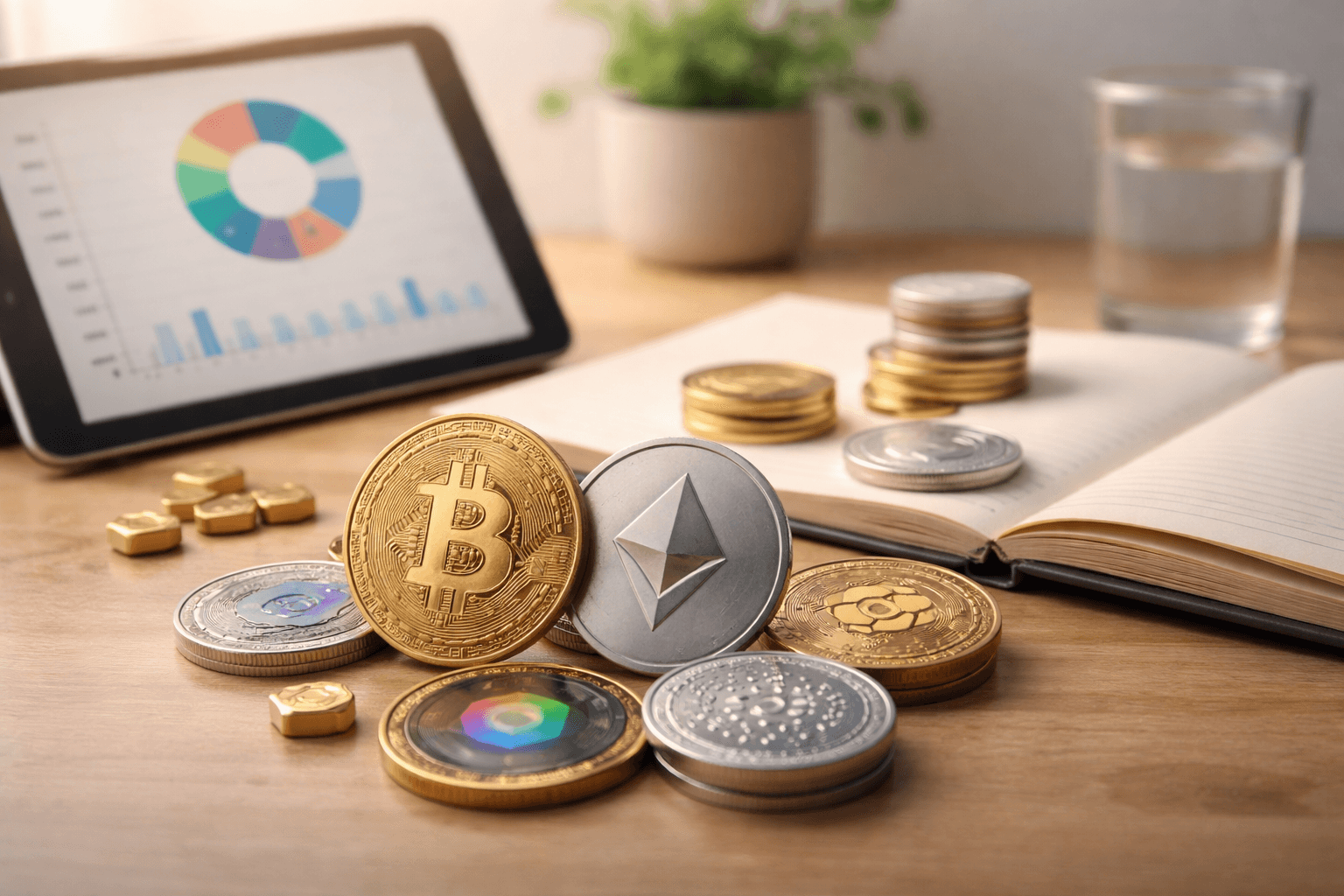
Bitcoin and Ethereum remain the foundation of most crypto portfolios—and for good reason. They're the largest, most liquid, and most battle-tested digital assets. But as the crypto ecosystem matures, opportunities beyond the big two deserve consideration.
Diversification in crypto isn't about owning 50 random tokens. It's about strategic exposure to different sectors, risk profiles, and use cases that may perform differently under various market conditions.
Key Principle
Diversification reduces unsystematic risk (specific to individual assets) but cannot eliminate systematic risk (affecting the entire crypto market). During major downturns, most crypto assets fall together.
Why Diversify Beyond BTC and ETH?
Different Growth Profiles
Bitcoin and Ethereum are mature assets with trillion-dollar and multi-hundred-billion-dollar market caps respectively. While they offer relative stability, their percentage upside may be limited compared to smaller projects.
Smaller-cap altcoins can potentially offer higher returns—but with significantly higher risk. A well-constructed portfolio balances both.
Sector Exposure
The crypto ecosystem has evolved into distinct sectors:
- Smart contract platforms (Layer 1s and Layer 2s)
- DeFi (lending, DEXs, derivatives)
- Infrastructure (oracles, storage, bridges)
- Real-world assets (tokenized securities, commodities)
- Gaming and metaverse
Different sectors may outperform at different times based on adoption cycles and market narratives.
Hedging Specific Risks
Concentrating everything in one asset means maximum exposure to that asset's specific risks—technical failures, regulatory targeting, competition, or leadership issues. Spreading across multiple projects reduces single-point-of-failure risk.
Portfolio Allocation Frameworks
Several frameworks exist for structuring a crypto portfolio. Here are three common approaches:
Conservative Approach (Low Risk Tolerance)
| Allocation | Category | Examples |
|---|---|---|
| 60% | Bitcoin | BTC |
| 20% | Ethereum | ETH |
| 10% | Stablecoins | USDC, DAI |
| 10% | Blue-chip altcoins | SOL, BNB |
Best for: New investors, those approaching retirement, or anyone prioritizing capital preservation.
Balanced Approach (Moderate Risk Tolerance)
| Allocation | Category | Examples |
|---|---|---|
| 40% | Bitcoin | BTC |
| 25% | Ethereum | ETH |
| 20% | Large-cap altcoins | SOL, XRP, ADA, LINK |
| 10% | Mid-cap/Emerging | ARB, OP, AAVE |
| 5% | Stablecoins | USDC |
Best for: Investors with multi-year time horizons who can tolerate volatility.
Aggressive Approach (High Risk Tolerance)
| Allocation | Category | Examples |
|---|---|---|
| 25% | Bitcoin | BTC |
| 20% | Ethereum | ETH |
| 35% | Mid-cap altcoins | SOL, AVAX, LINK, UNI |
| 15% | Small-cap/Emerging | Various DeFi, L2s, RWAs |
| 5% | Stablecoins | For tactical buying |
Best for: Experienced investors with long time horizons who fully understand the risks.
Risk Reality Check
Research shows that crypto allocations exceeding 4% of a total investment portfolio can account for over 20% of total portfolio risk due to extreme volatility. Size your crypto allocation appropriately within your broader financial picture.
Sectors Worth Considering
Layer 1 Platforms
These are the foundational blockchains that compete to host applications:
Solana (SOL): Known for high speed and low fees. Strong adoption in NFTs, DeFi, and payments. Institutional interest surged in 2025.
Avalanche (AVAX): Focuses on subnets for customizable blockchains. Strong in gaming and institutional applications.
Cardano (ADA): Research-driven development with academic rigor. Slower but methodical approach to scaling.
Consideration: Layer 1s compete directly with Ethereum. They offer higher growth potential but face the challenge of attracting and retaining developers and users.
Layer 2 Solutions
Layer 2s scale Ethereum by processing transactions off the main chain:
Arbitrum (ARB): The largest Ethereum L2 by total value locked. Dominant position in DeFi applications.
Optimism (OP): Second-largest Ethereum L2. Powers the Superchain vision with Base and other chains.
Polygon (POL): Multiple scaling solutions including zkEVM. Strong enterprise partnerships.
Consideration: L2s are tied to Ethereum's success but can capture value from growing transaction volume as the ecosystem scales.
DeFi Protocols
Decentralized finance tokens power on-chain financial services:
Aave (AAVE): Leading decentralized lending protocol. Users deposit crypto to earn yield or borrow against collateral.
Uniswap (UNI): Largest decentralized exchange by volume. Enables trustless token swaps.
Maker (MKR): Governs the DAI stablecoin system. Foundational DeFi infrastructure.
Consideration: DeFi tokens capture value from financial activity but face regulatory uncertainty and smart contract risks.
Infrastructure & Oracles
Chainlink (LINK): Dominant oracle network providing real-world data to smart contracts. Critical infrastructure for DeFi.
The Graph (GRT): Indexing protocol for querying blockchain data. Essential developer tooling.
Consideration: Infrastructure plays tend to be less volatile than application-layer tokens and benefit from overall ecosystem growth.
Real-World Assets (RWAs)
Tokenized traditional assets represent a growing narrative:
PAX Gold (PAXG): Each token is backed by one ounce of physical gold. Provides traditional safe-haven exposure within crypto.
Ondo (ONDO): Tokenized US Treasuries bringing traditional yield on-chain.
Consideration: RWAs may offer lower correlation to crypto-native assets, providing true diversification benefits.
How Many Assets to Hold
More isn't always better. Research suggests:
- 5-10 assets: Optimal for most retail investors. Provides meaningful diversification without becoming unmanageable.
- 8-15 assets: Suitable for more active investors who can monitor positions.
- Beyond 15: Diminishing returns on diversification; increased complexity.
Many tokens that appear diverse are actually highly correlated. Holding 30 different altcoins doesn't necessarily provide more diversification than holding 8 carefully selected ones from different sectors.
Quality Over Quantity
A focused portfolio of well-researched assets typically outperforms a scattered portfolio of random tokens. Stick to projects you understand and can explain to someone else.
Building Your Diversified Portfolio
Step 1: Establish Your Core (60-70%)
Start with Bitcoin and Ethereum as your foundation. These should represent the majority of your crypto allocation until you're experienced enough to evaluate alternatives.
Suggested split: 40% BTC / 25% ETH for balanced risk-return.
Step 2: Add Satellite Positions (25-35%)
Select 3-5 altcoins from different sectors:
- 1-2 alternative Layer 1s
- 1-2 DeFi protocols or infrastructure plays
- 1 emerging narrative (RWAs, AI, etc.)
Position sizes for satellites: 3-8% each.
Step 3: Maintain a Stablecoin Reserve (5-10%)
Keep some capital in stablecoins for:
- Buying opportunities during dips
- Reducing volatility
- Earning yield through DeFi
Step 4: Rebalance Periodically
As prices move, your allocation will drift. Rebalance quarterly or when positions deviate significantly (>5%) from targets.
Rebalancing forces you to sell high and buy low—trimming winners and adding to underperformers.
Common Diversification Mistakes
1. False Diversification
Owning 10 different DeFi tokens isn't diversification—they'll likely move together. True diversification requires exposure across different:
- Sectors (L1s, DeFi, infrastructure)
- Risk profiles (large-cap to small-cap)
- Narratives (store of value, smart contracts, yield)
2. Over-Diversification
Holding 40+ tokens makes it impossible to:
- Monitor developments in each project
- React quickly to negative news
- Understand what you actually own
Meaningful positions require meaningful allocations. A 0.5% position won't impact your portfolio even if it 10x's.
3. Chasing Past Performance
Last cycle's winners rarely repeat. Allocating heavily to whatever pumped most recently typically leads to buying tops.
4. Ignoring Correlation
During broad market downturns, correlation among crypto assets approaches 1.0—everything falls together. Diversification helps with individual asset risk but won't save you from systematic crypto selloffs.
5. Forgetting About Overall Portfolio
Your crypto allocation should fit within your broader financial picture. If crypto is 5% of your total portfolio, obsessing over the split between SOL and AVAX matters less than maintaining that 5% target.
Frequently Asked Questions
How much should I allocate to altcoins vs Bitcoin?
A common guideline is 60-70% in BTC/ETH combined, with 25-35% in altcoins. Adjust based on your risk tolerance and conviction in specific projects.
Should I own NFTs for diversification?
NFTs can provide exposure to different crypto sectors (gaming, art, collectibles) but are highly illiquid and speculative. Most portfolios don't need direct NFT exposure—consider NFT-related tokens instead.
How often should I rebalance?
Quarterly rebalancing is sufficient for most investors. More frequent rebalancing increases transaction costs and tax complexity without significant benefit.
What's the minimum portfolio size for diversification?
With very small amounts (under $1,000), focus on BTC and ETH only. Transaction fees and complexity make altcoin diversification impractical at small sizes.
Should I diversify across different blockchains?
Yes. Multi-chain exposure reduces risk from any single blockchain's technical issues or competitive decline. Most diversified portfolios naturally achieve this through sector allocation.
The Bottom Line
Diversification in crypto isn't about owning everything—it's about thoughtful exposure to different opportunities while managing risk. A portfolio of 8-12 well-researched assets across various sectors will serve most investors better than either pure Bitcoin maximalism or scattered bets on 50 random altcoins.
Start with a strong BTC/ETH core, add carefully selected satellite positions, maintain dry powder in stablecoins, and rebalance periodically. This approach won't guarantee profits, but it provides a framework for participating in crypto's upside while managing the inevitable volatility.
Further Reading
Disclaimer: This article is for informational purposes only and does not constitute financial advice, investment recommendations, or an endorsement of any particular security or strategy. Always conduct your own research and consult with a qualified financial advisor before making investment decisions. Past performance is not indicative of future results.
Enjoying this article? Get more like it.
No spam, unsubscribe anytime.
Written by
John SmithJohn is a financial analyst and investing educator with over 10 years of experience in the markets.